How Indie Developers Actually Make Money From Free Browser Games
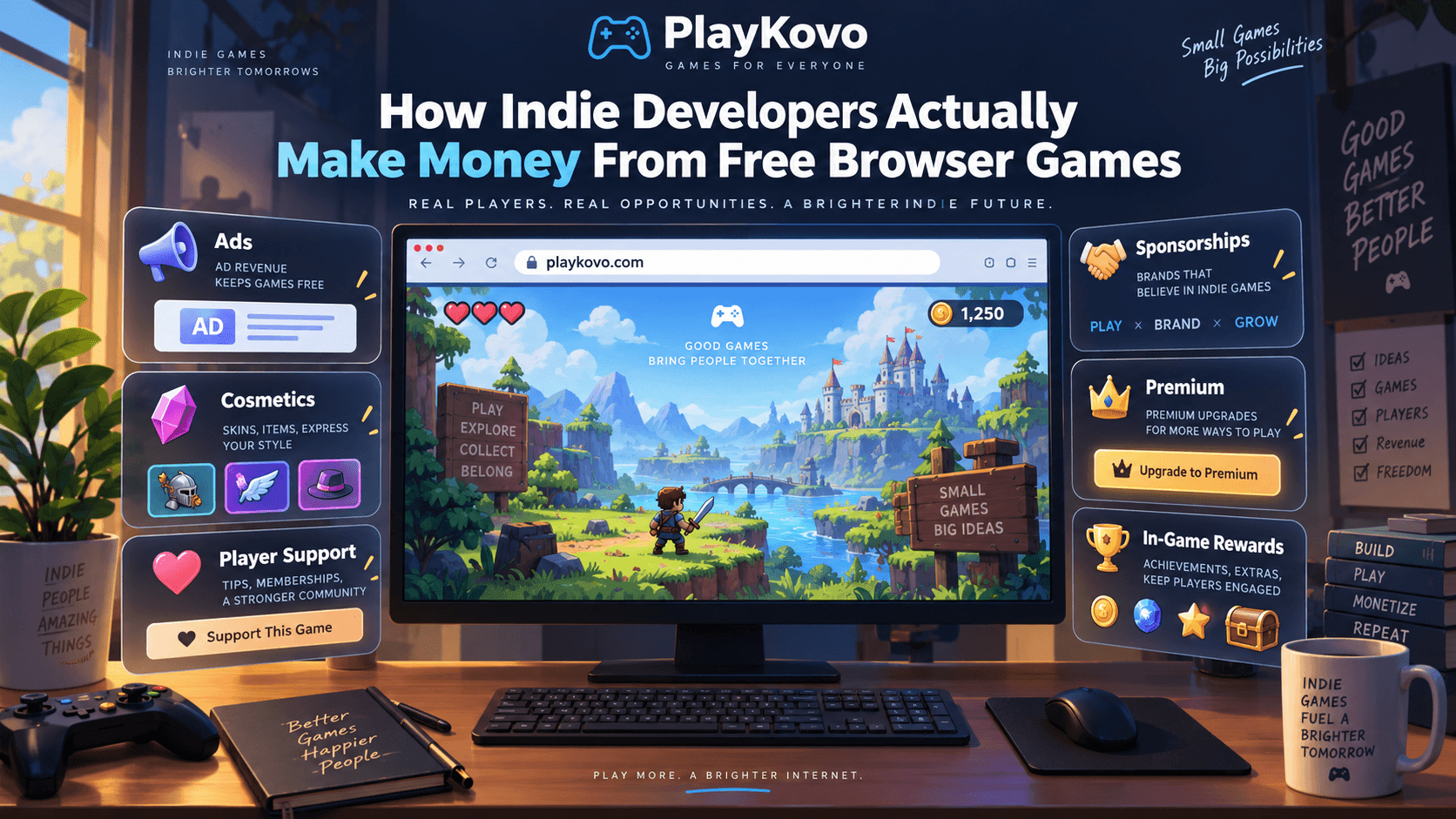
"Free to play" doesn't mean "no revenue," it means the revenue model isn't a purchase price. Here's a realistic look at how that actually works for indie browser game developers specifically.
Ad-Based Revenue
The most common model for free browser games is advertising, typically revenue-shared between the developer and whichever portal or network is distributing the game. This is the closest thing to a default for the category, since it doesn't require the player to pay anything at all.
In-Game Purchases and Cosmetics
Some free games sell optional extras, cosmetic items, convenience features, or unlocks, without gating core gameplay behind a paywall. This model depends heavily on having enough of an active player base to make optional purchases add up.
Sponsorship and Licensing Deals
Less common for solo indie developers, but real: a game can be licensed to run on multiple portals at once, or built around a sponsorship arrangement, generating revenue independent of direct player spending.
What Actually Determines Which Model Works
Game genre and audience size matter more than any general "best" model, a quick arcade game with huge player volume fits ad revenue well, while a smaller game with a dedicated niche audience might do better with optional purchases. There's no universal answer, and most working indie developers end up mixing more than one approach rather than relying on a single stream.
Where Publishing Platforms Fit Into This
A game's monetization is separate from where it's published, but the platform still matters, an open submission process gets your game in front of players faster than a curated, invite-only one. PlayKovo's developer panel is built around this kind of open access, with self-serve upload tools, per-game analytics, and API key generation for SDK integration, letting a developer get a game live and start gathering real player data without going through a lengthy curation process first.
FAQ
Is advertising the only way to make money from a free browser game?
No, ad revenue is common, but optional in-game purchases, licensing, and sponsorship deals are all real alternatives, and many developers combine more than one.
Do all free games make money the same way?
No, the right model depends heavily on genre and audience size, a high-volume arcade game and a niche puzzle game often fit different approaches.
Does the platform a game is published on affect monetization directly?
Indirectly, an open, low-friction publishing process gets a game in front of players faster, which affects the audience size that any monetization model depends on.
What does an open developer panel actually provide?
Typically self-serve upload tools, per-game analytics, and API access for SDK integration, the practical infrastructure a developer needs regardless of which specific monetization model they choose.
Final Thoughts
There's no single "correct" way to make money from a free browser game, the right model depends on the game itself. What does help across the board is getting a game in front of players without a heavy publishing bottleneck first, which is the specific gap PlayKovo's open developer panel is built to close.
Featured app
PlayKovo
Related Posts
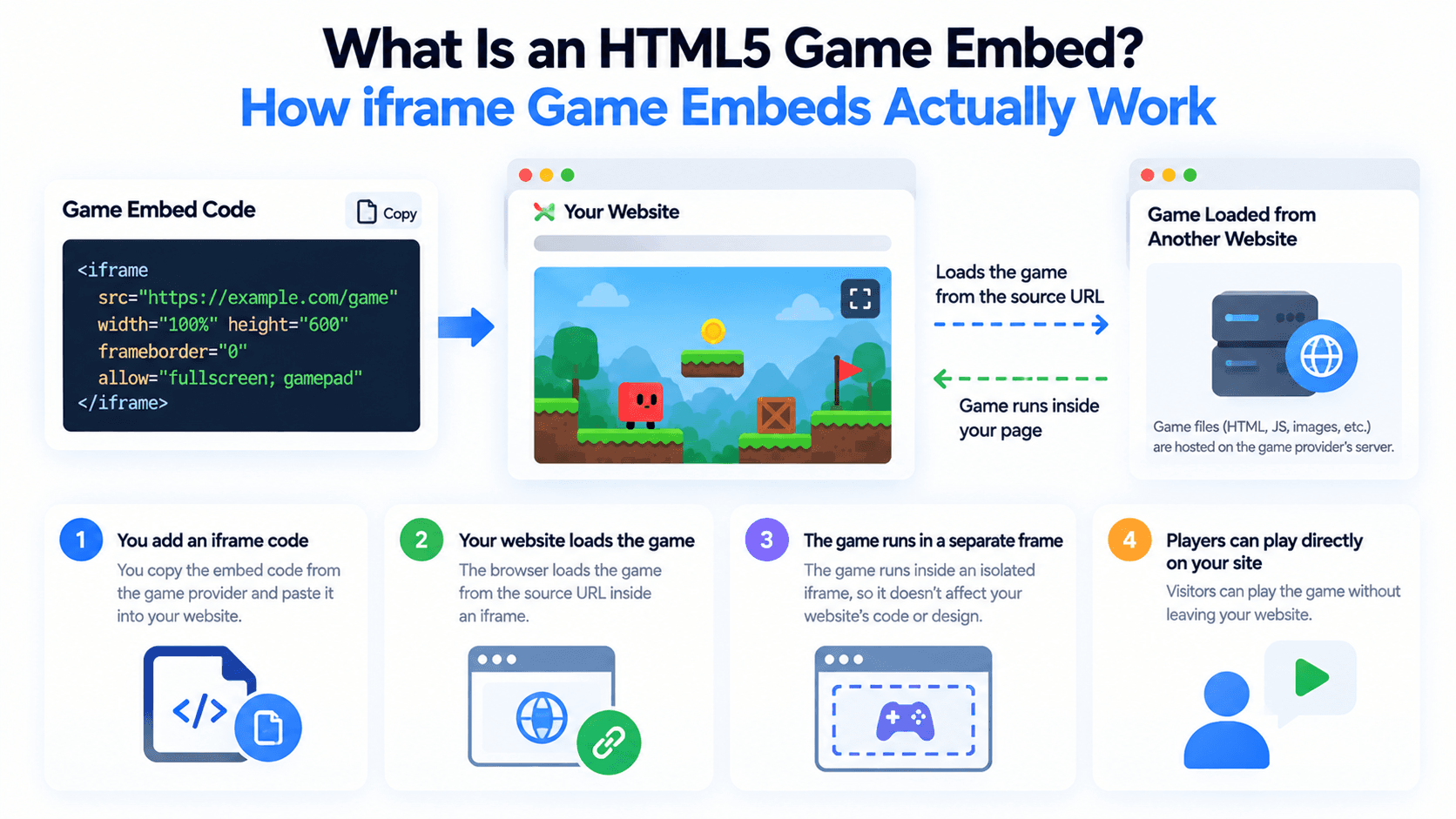
What Is an HTML5 Game Embed? How iframe Game Embeds Actually Work
Adding a free game to your site usually means embedding an iframe pointed at someone else's server. Here's what's actually happening under the hood, and what the src, allow, and sandbox attributes control.
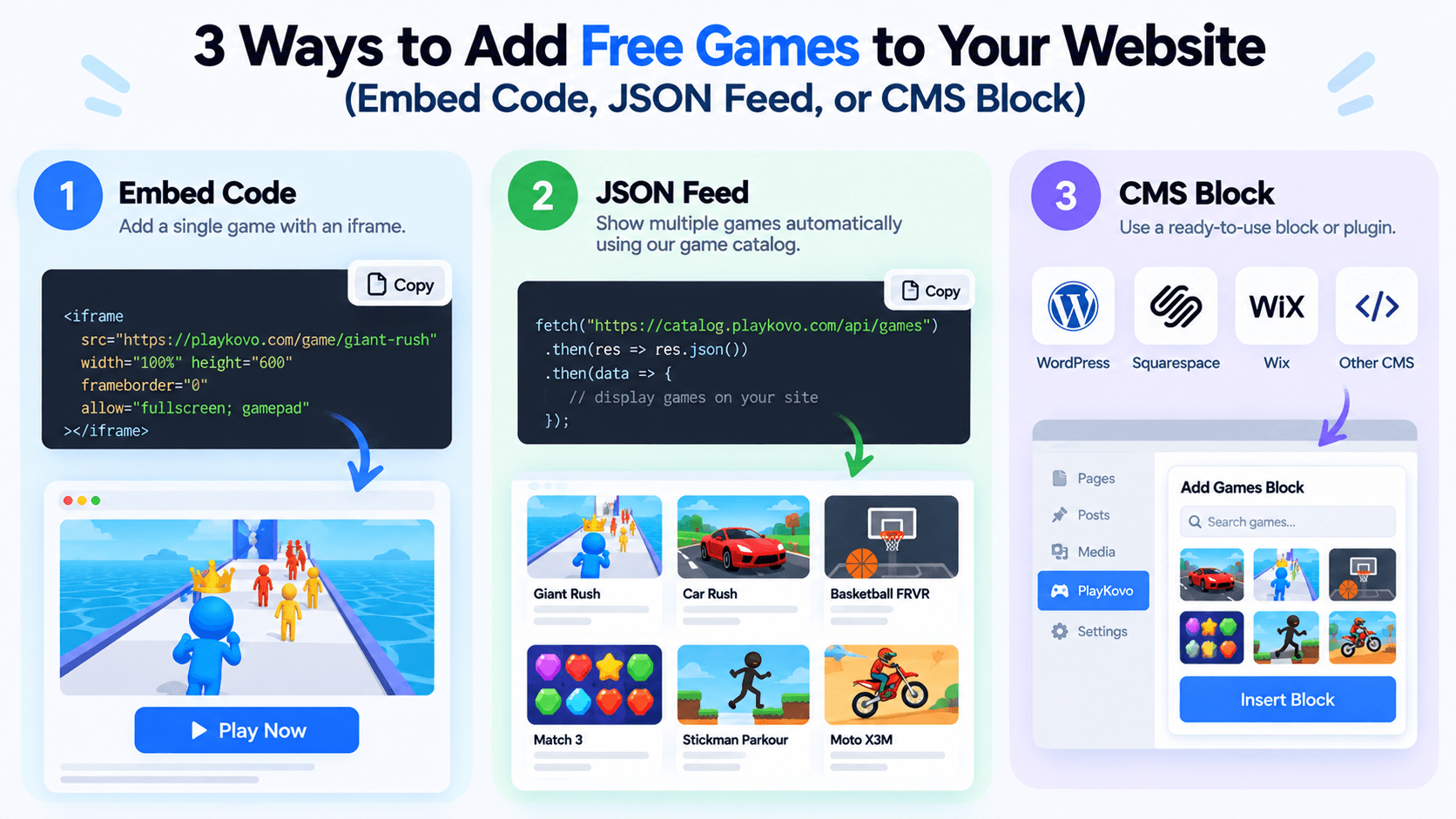
3 Ways to Add Free Games to Your Website (Embed Code, JSON Feed, or CMS Block)
There's more than one way to put free HTML5 games on your site, and the right one depends on how many games you want and how often that list should change. Here's a practical comparison of the three main options.
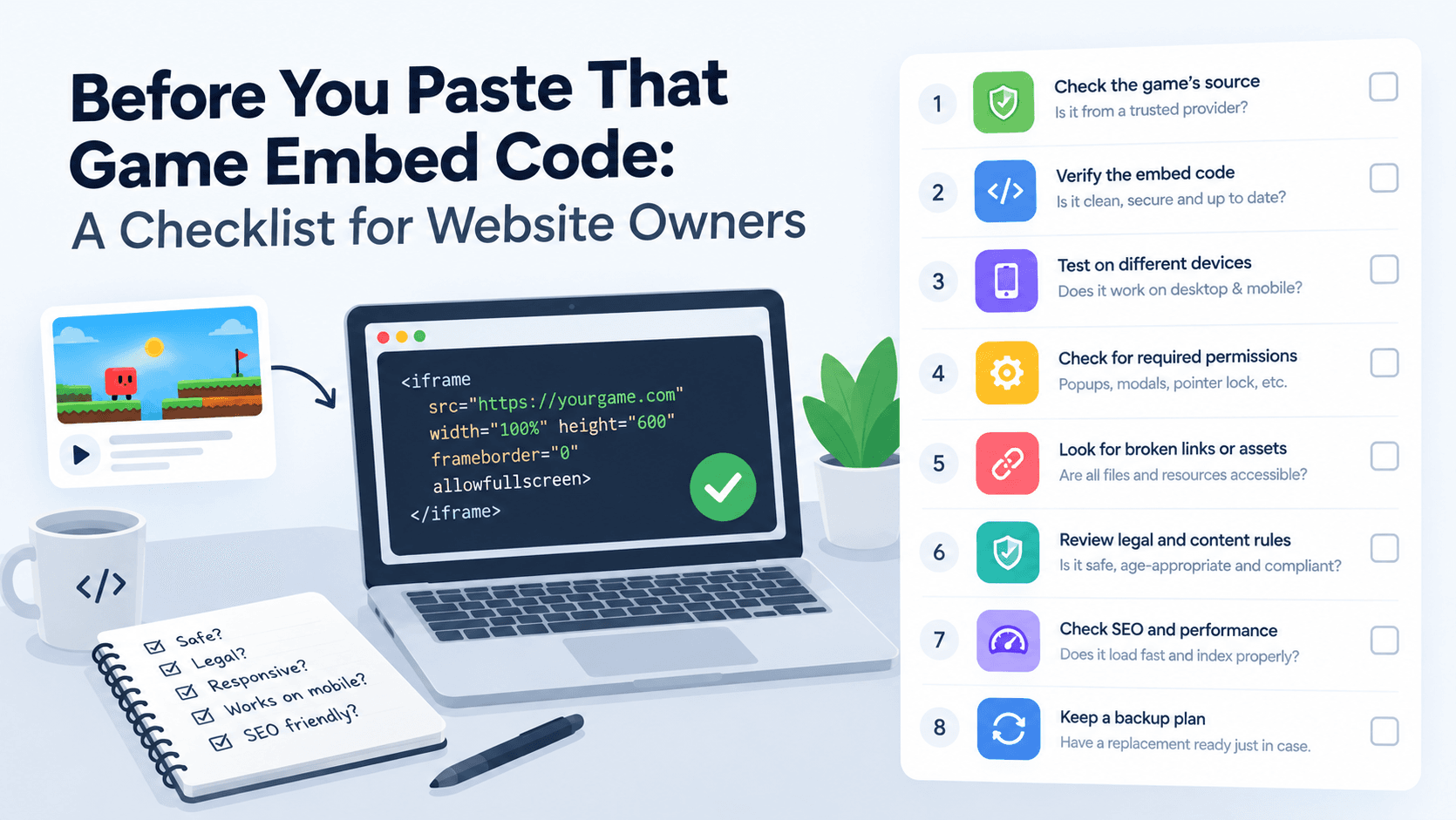
Before You Paste That Game Embed Code: A Checklist for Website Owners
An embed code is easy to copy and paste, which is exactly why it's easy to skip the questions worth asking first. Here's what to check before a free game goes live on your site.