How to Practice Wordle Without Looking Up Answers
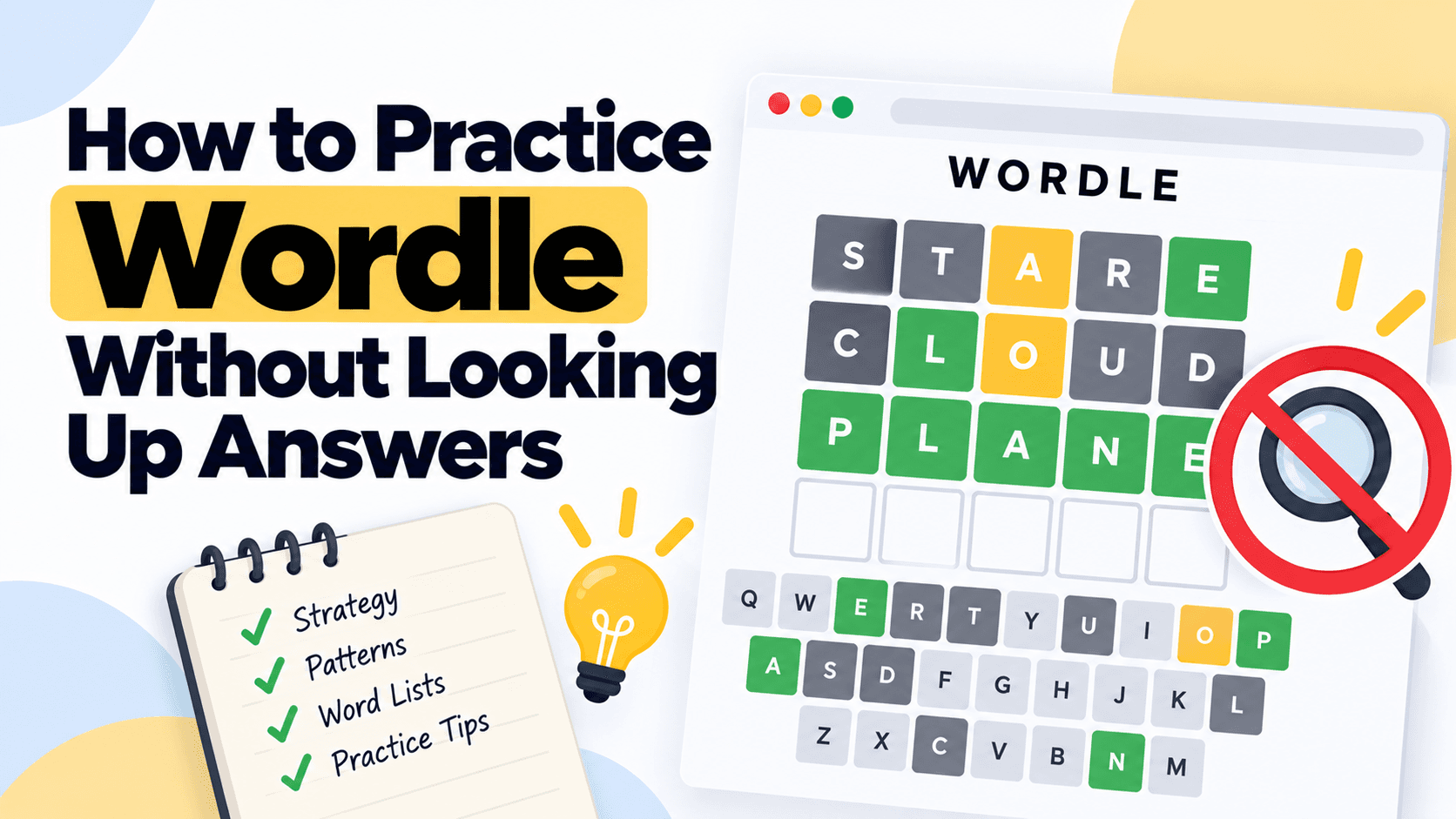
You can get better at Wordle without ever looking up an answer. The skill is not knowing words in advance; it is reading feedback correctly and choosing guesses that remove the most possibilities. Both can be trained with short drills, and this guide gives you a plan you can start today.
What this guide is based on. The scoring rule used in the drills (greens first, then yellows while copies remain) is the one we verified against 21 rows of the live NYT game on 16 October 2026. The boards below are computed with that rule. The plan itself is a practice method we propose; we have not run a study on how much it improves scores, so we make no promise about results.
Why looking up answers does not help
Checking a solution after a loss tells you one word. It does not tell you why your guesses failed. Practice that improves your play looks at the decisions: which letters you wasted, which hints you ignored and which guess could have split the options. You can do that on your own game without any outside answer.
The seven-day plan
Spend ten to fifteen minutes a day, and keep your normal daily puzzle as the main game.
| Day | Focus | What to do |
|---|---|---|
| 1 | Read the feedback | Before each guess, say aloud what every colored tile tells you |
| 2 | Opening discipline | Use the same opener all day and note how often it gives you any green or yellow |
| 3 | Second guess | Make guess 2 use five new letters, then compare its information with guess 1 |
| 4 | Double letters | Run drill A below, then re-read our guide to double letters |
| 5 | Elimination | Run drills B and C below |
| 6 | Hard Mode | Play one puzzle in Hard Mode to practice using hints, see how Hard Mode works |
| 7 | Review | Fill in the tracking table and pick one habit to change |
Drill A: Read a board you did not play
Here is a board. Before reading the notes, write down what you know about the answer.
What the board shows:
- SLATE: A in position 3 and E in position 5 are green. S, L, T are gray.
- ORBIT: R in position 2 is green. O, B, I, T are gray.
- So the word looks like _ R A _ E. Letters used and excluded: S, L, T, O, B, I.
Candidates include CRANE, GRADE, GRAPE, DRAPE and others. Which guess would split them best? A word that tests the missing first and fourth letters, such as one containing C, G or P, narrows it faster than one that repeats known letters. Every candidate we named here fits the board, but the list is not complete.
Drill B: Count what is left
Take any board from your own game after three guesses. Write the pattern with greens in place, list the yellow letters and cross out the grays. Then count how many words you can think of. If you can list more than four, your next guess should split them, not choose one.
Use this table for each letter on the keyboard:
| Letter state | What to write down |
|---|---|
| Green | The position |
| Yellow | The positions it cannot be in |
| Gray | Crossed out, unless a copy of it was colored |
| Untested | Leave open |
Drill C: Compare two guesses
Here is a computed case. The hidden word is CRANE. You have two possible third guesses, TRACE and CRANE.
TRACE gives you information about C. CRANE wins. The drill is to decide, with the letters you know, which kind of guess you need: one that tests letters or one that could win. A good rule of thumb is that with four or more guesses left you can afford a test, and with two left you should guess a candidate.
You can try your own pairs with the tool below.
Try it yourself
Type any five-letter answer and guess. This is a practice tool with your own made-up answer, not today's puzzle.
- T (gray): T is not in the answer, so it is gray.
- R (green): Pass 1: R is the answer's letter 2, so it is green and uses up a copy of R.
- A (green): Pass 1: A is the answer's letter 3, so it is green and uses up a copy of A.
- C (yellow): Pass 2: C is in the answer and a copy is still unused, so it is yellow.
- E (green): Pass 1: E is the answer's letter 5, so it is green and uses up a copy of E.
Note POUND against ROUND or SOUND: in both, four tiles are green and only the first letter is gray. That is the trap of word families, where one hint leaves many words. When you see four greens, count how many words fit before you choose.
Track your play
Keep a tiny table for a week. It takes one minute.
| Date | Opener | Solved in | Wasted letters | One thing to change |
|---|---|---|---|---|
"Wasted letters" means letters you guessed again after they were already known to be gray. Fewer is better. Keep your own numbers rather than comparing with strangers.
Mistakes that block progress
- Playing fast. Speed makes you ignore hints. Slow down on guess 2 and 3.
- Changing your opener every day. You cannot judge an opener you only used once.
- Forgetting gray letters. Repeating one is the most common waste.
- Guessing a word because it feels right. Check that it fits every hint first.
- Skipping the review. The habit is the practice.
Weekly checklist
- Did I read every hint before guessing?
- Did my guess fit all the greens and yellows (unless I wanted a test)?
- Did I avoid reusing gray letters?
- Did I think about double letters on guesses with repeats?
- Did I write down one thing to change?
For opener ideas, see our guide to Wordle starting words. If your daily puzzle is not loading, see Wordle not working today.
The takeaway
Practice the reading, not the answers. Seven short sessions of reading feedback, counting what is left and comparing guesses will teach you more than any list of solutions. Keep one habit to change each week.
Related Posts
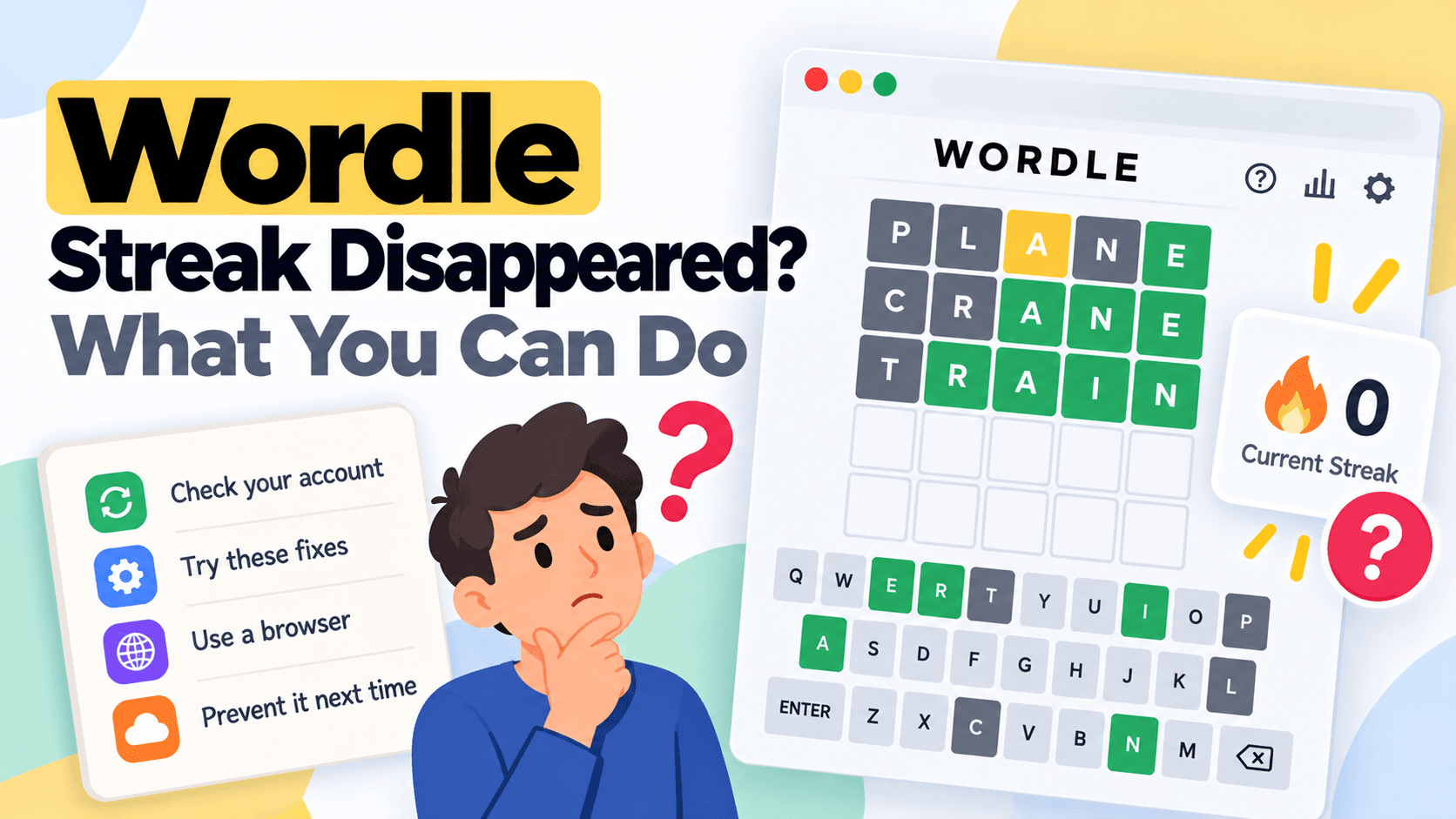
Wordle Streak Disappeared? What You Can Do
A Wordle streak is stored in your browser unless you are logged in to an NYT account. We tested what happens to a signed-out player's stats when the page reloads, when site data is cleared and in a fresh browser, and list fixes by symptom, with honest limits on what can be recovered.
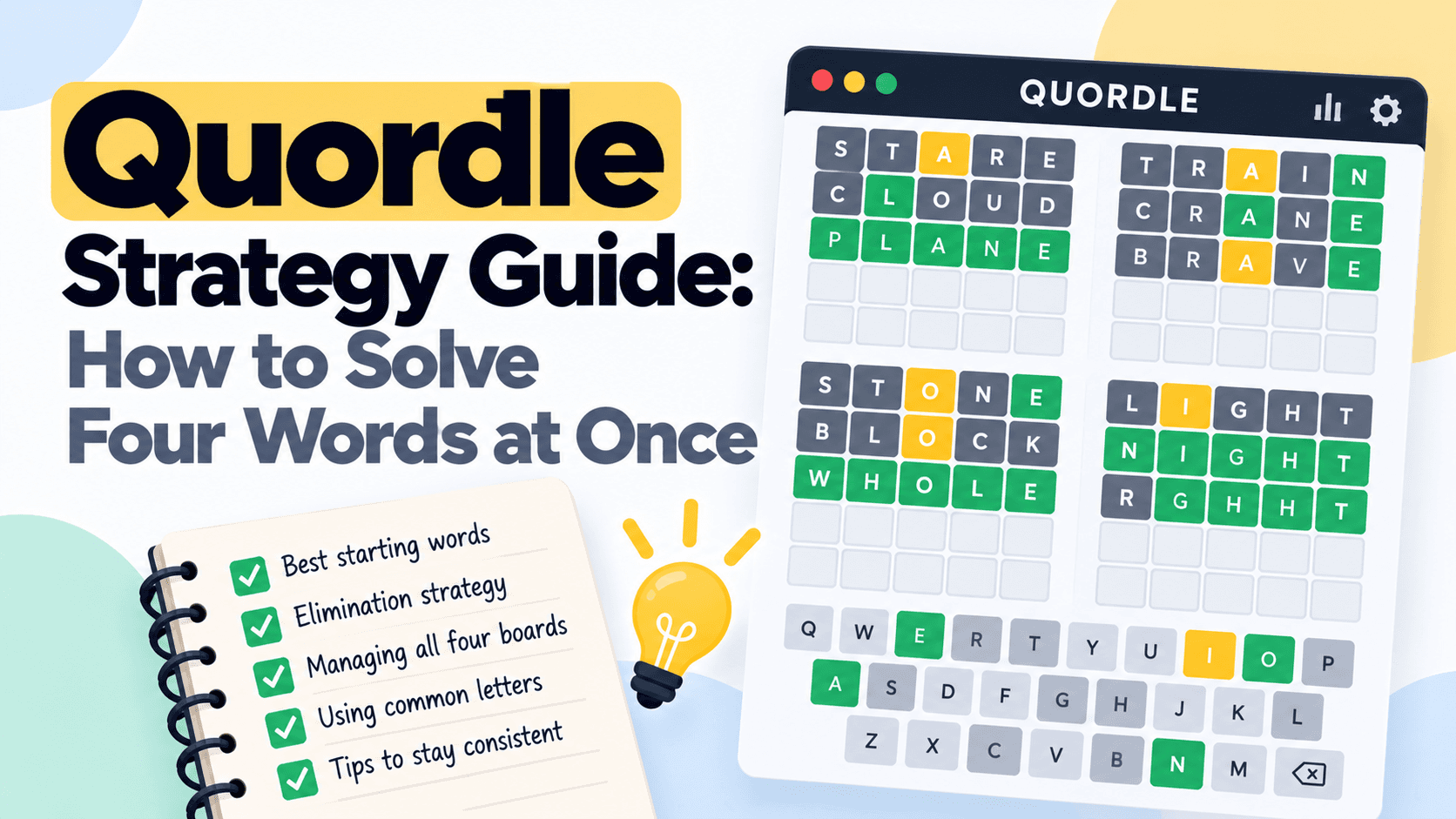
Quordle Strategy Guide: How to Solve Four Words at Once
Quordle gives you nine guesses for four hidden words and applies each guess to all four boards. We played the live game to confirm the mechanics, and this guide turns them into a practical plan: how to open, when to focus on one board and how to spend your last guesses.
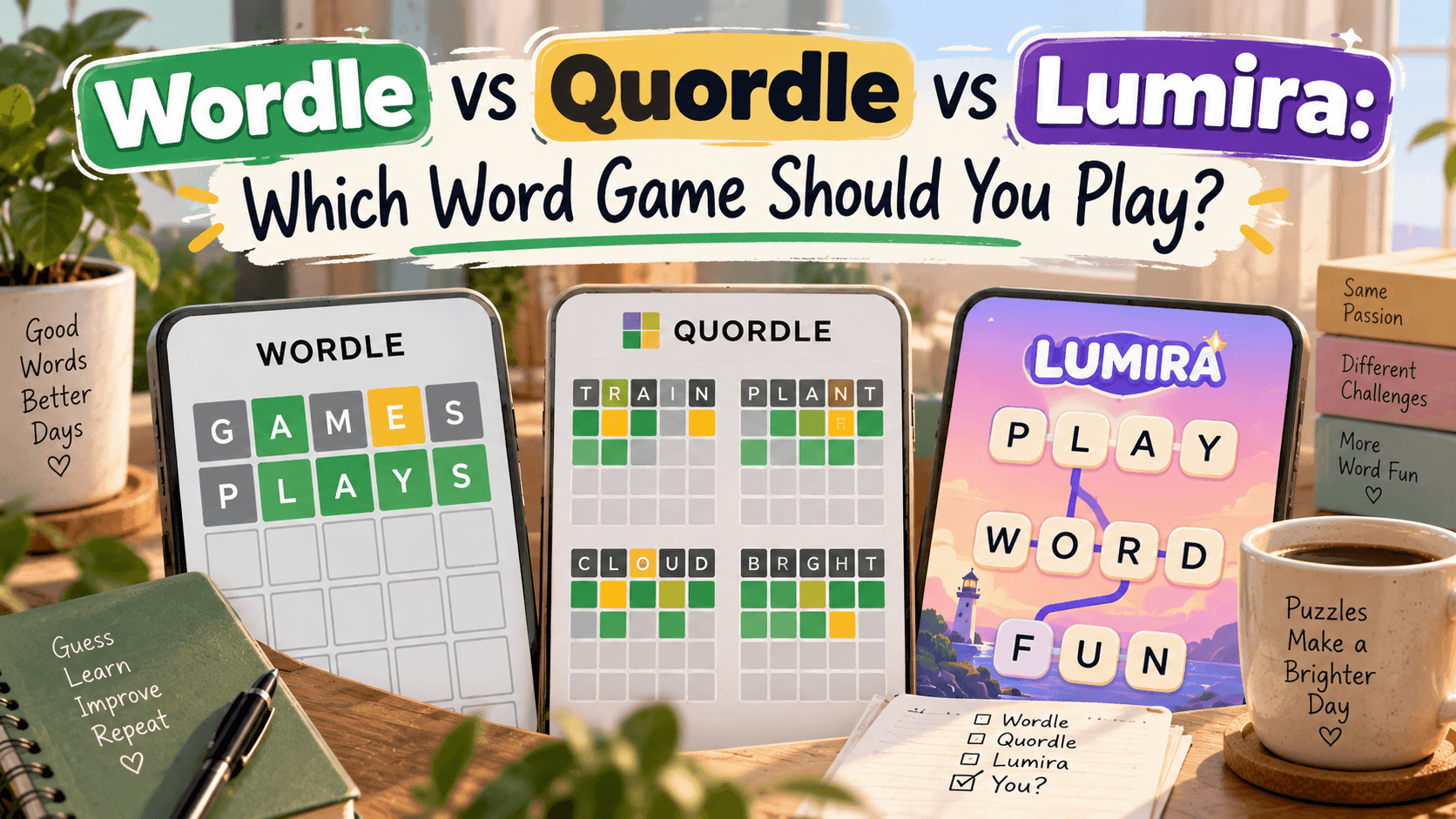
Wordle vs Quordle vs Lumira: Which Word Game Should You Play?
All three are guess-the-word puzzle games, but they solve very different problems. Here's a direct, honest comparison of Wordle, Quordle, and Lumira to help you figure out which one actually fits how you want to play.