From Game Jam to Published Game: A Realistic Timeline for Solo Devs
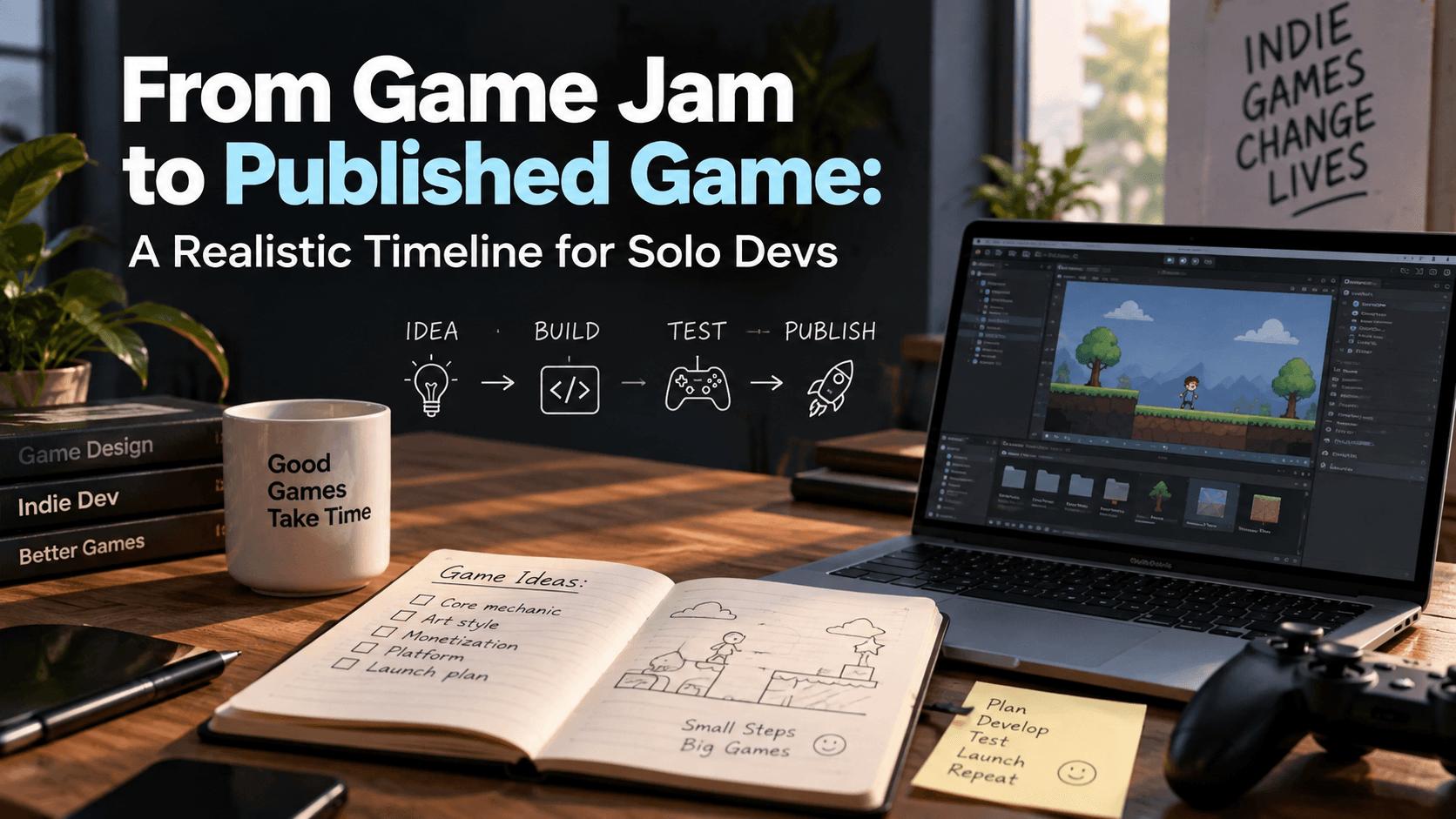
A game jam prototype and a published game share a codebase, sometimes, but they're not the same project in terms of remaining work. Here's a realistic breakdown of the gap between them.
What a Game Jam Actually Produces
A 48 to 72-hour jam typically produces a rough proof of concept, one core mechanic working, minimal polish, no real handling of edge cases. That's the entire point of a jam, prove the idea works, not ship a finished product. Treating a jam build as "basically done" is the most common mistake solo developers make coming out of one.
The Work That Actually Remains
- Polish and game feel, the difference between a mechanic technically working and actually feeling good, often takes as long as building the mechanic in the first place.
- Handling edge cases, what happens when a player does something unexpected, this is usually invisible in a jam build because nobody's had time to break it yet.
- Real content, a jam typically has one level or one scenario, a published game generally needs meaningfully more.
- Platform requirements, whatever a publishing platform or portal needs technically, size limits, SDK integration, submission formatting.
- Actual testing, beyond the developer and a few friends, which surfaces problems no amount of solo playtesting will catch.
A Realistic Timeframe
For a solo developer working part-time around another job, taking a solid jam prototype to something genuinely publishable commonly takes two to six months, depending heavily on scope. A small, focused game can move faster, an ambitious one with lots of content will take longer, and it's rarely a quick weekend extension of the jam build.
Where to Actually Publish Once It's Ready
When the game is genuinely ready, picking a platform with a low-friction submission process matters, since a curated, invite-only portal adds real time on top of development itself. PlayKovo's developer panel is built around open, self-serve submission, upload your build, add a cover image and category tags, and submit for review, without needing an invitation first.
FAQ
Is a game jam prototype ready to publish as-is?
Almost never, a jam build is a proof of concept, polish, edge-case handling, and additional content are usually still needed before it's genuinely publishable.
How long does it typically take to go from prototype to published game solo?
Commonly two to six months for a part-time solo developer, depending heavily on the scope of the game.
What part of development do solo developers usually underestimate?
Polish and edge-case handling, these are largely invisible in a jam build since there hasn't been time to stress-test the game yet.
Does the publishing platform affect the total timeline?
Yes, a curated, invite-only portal can add real time on top of development, while an open submission process like PlayKovo's developer panel doesn't add that extra bottleneck.
Final Thoughts
The gap between a jam prototype and a published game is real and usually bigger than it looks going in, mostly in polish, edge cases, and content, not the core mechanic itself. Once that work is actually done, an open publishing path like PlayKovo's developer panel at least keeps the last step from becoming its own bottleneck.
Featured app
PlayKovo
Related Posts

Expanding Land: The .io Game Where the Map Itself Is Alive
Expanding Land takes the familiar cell-eating .io formula and adds something most games in the genre never touch: a playable area that actually expands and contracts while you're inside it. Built entirely in C for speed, it's aiming to be one of the fastest games in its genre.
Anagram Solvers: How They Work and When Using One Is Fair
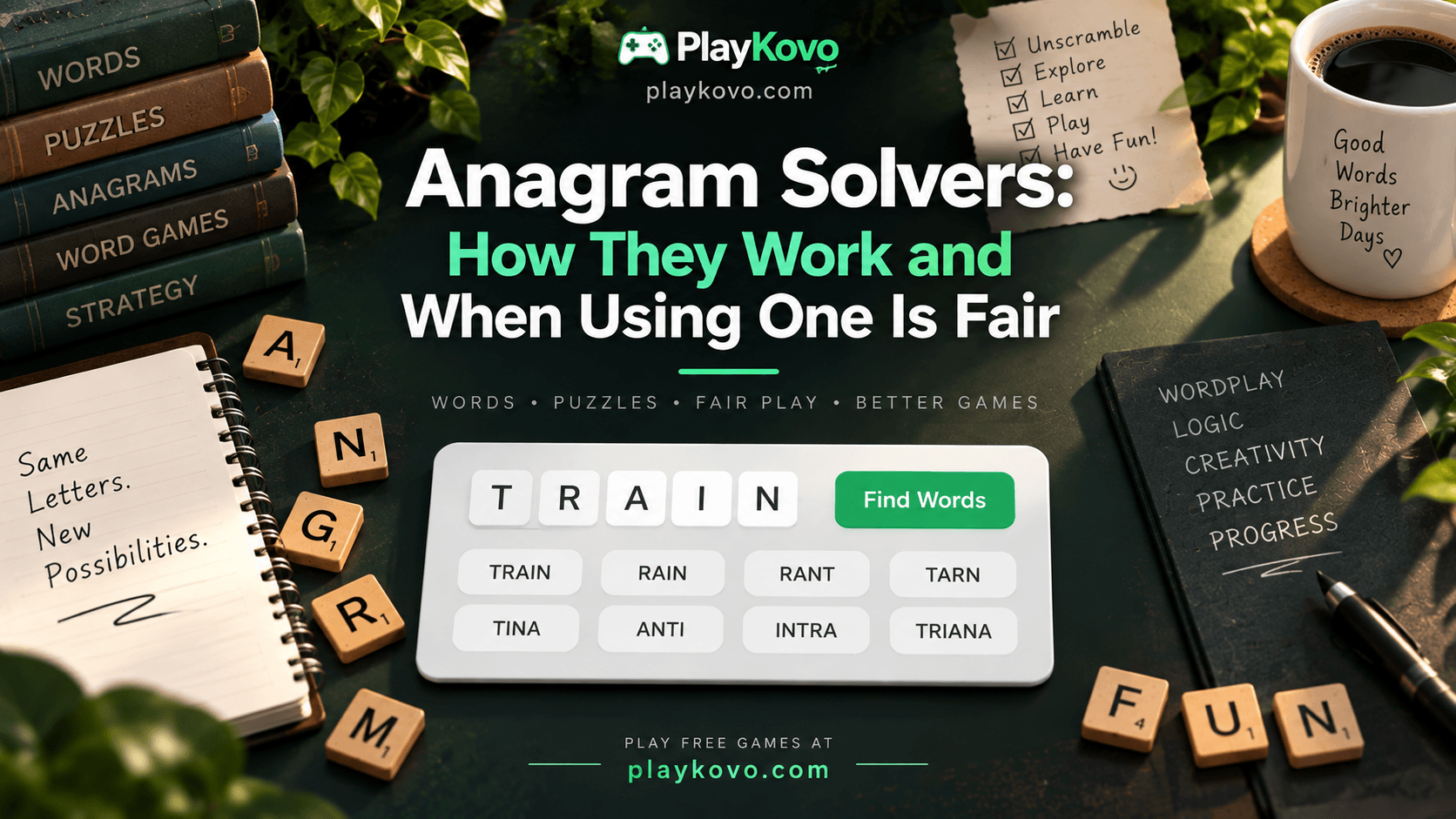
An anagram solver can instantly unscramble letters into real words, which raises an obvious question for word-puzzle players: is using one cheating, or just a different way to play?
How Indie Developers Actually Make Money From Free Browser Games
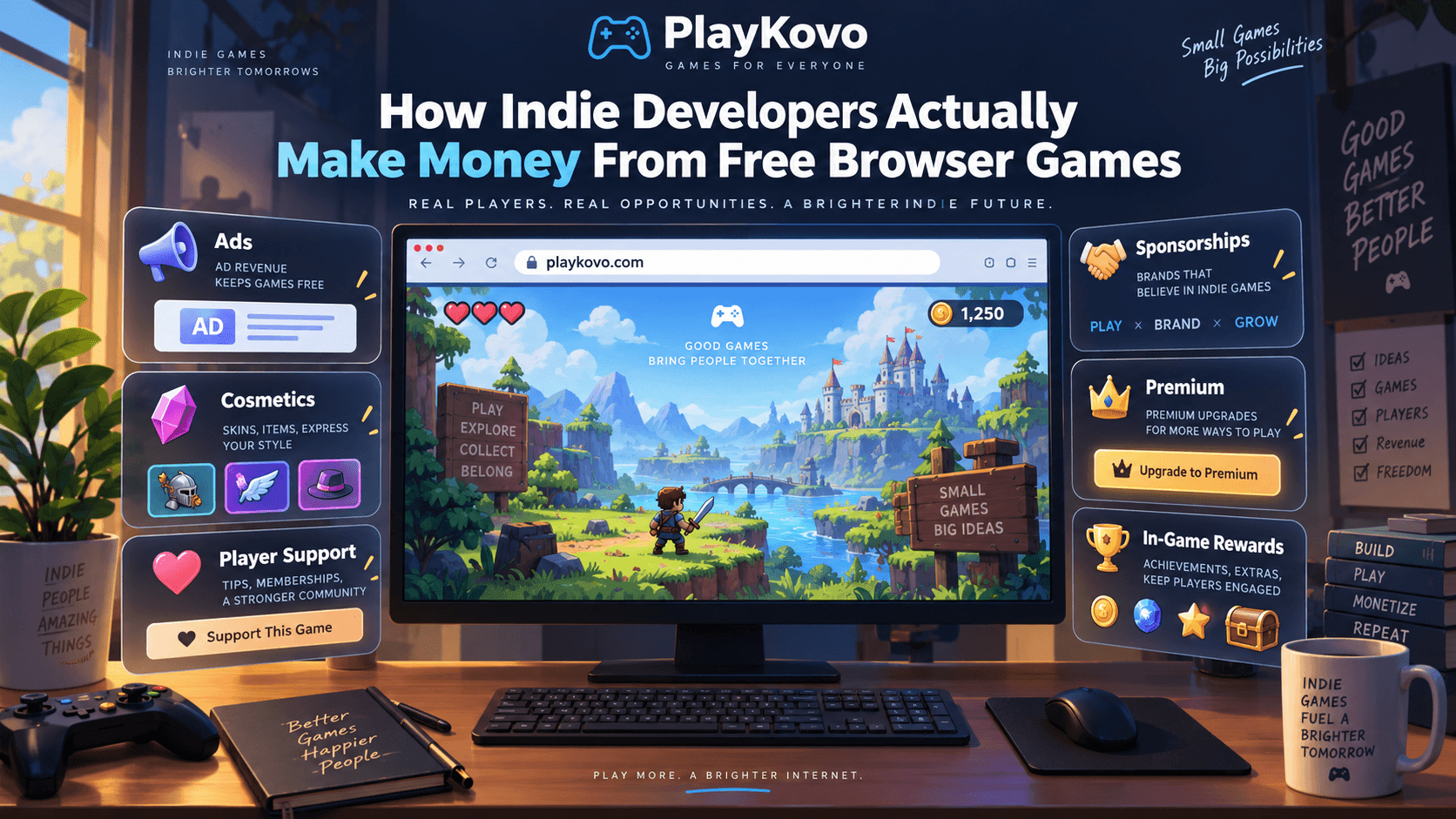
A free game isn't automatically an unprofitable one. Here's a realistic look at how indie developers monetize free browser games, without pretending every model works the same way.