Word Games for Kids: What to Actually Look For
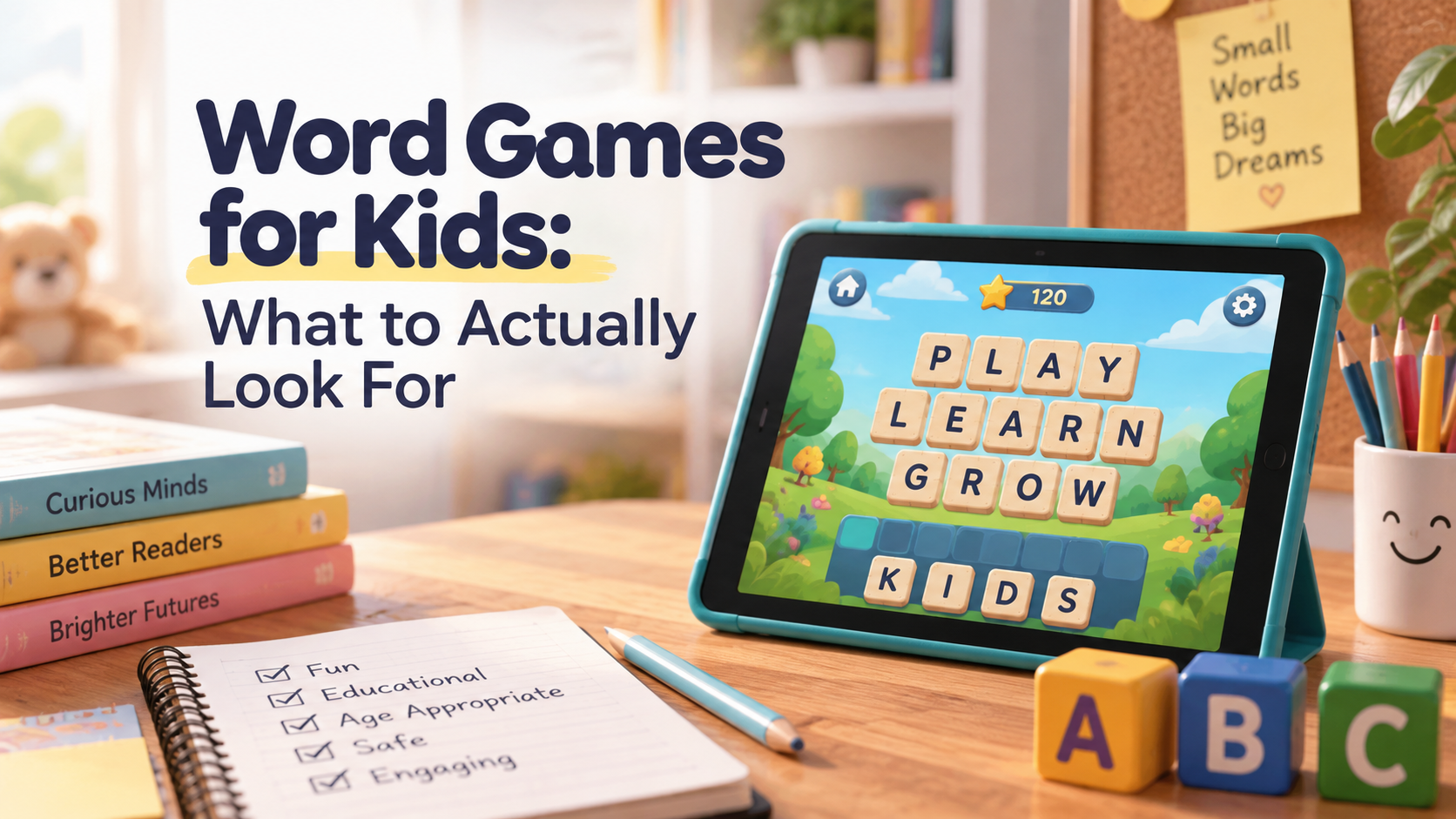
"Word game" covers a huge range of actual difficulty and design, and not all of it is built with younger players in mind. Here's what's actually worth checking before handing a word game to a kid.
Check the Actual Vocabulary Difficulty
A lot of word games, including the original Wordle, weren't designed around a specific age group and can include vocabulary well beyond what a younger player would know. Look at whether a game has any kind of difficulty tiering or level progression, rather than assuming "word game" automatically means age-appropriate.
Check What Social Features Actually Exist
Any game with real-time multiplayer or messaging between players deserves a closer look before a kid uses it unsupervised, the same way you'd check any app with chat or matchmaking against other real people. This applies to word games with duel or co-op modes just as much as any other multiplayer format.
Check Whether There's a Progression System, Not Just a Daily Cap
A single daily puzzle can be frustrating for a kid who wants to keep playing and simply can't. A level-based structure, with a clear sense of progress and no arbitrary daily wall, tends to hold a younger player's attention better than a once-a-day format built more with adult routines in mind.
Check for Ads and In-App Purchases
This matters more for kids than adults in most households, an ad-heavy or purchase-driven word game creates friction that's worth checking for before it becomes a problem.
Where This Leaves You
There's no single "best kids' word game" answer, since needs vary a lot by age and reading level, but checking vocabulary difficulty, social features, progression structure, and monetization covers the actual things that matter, well beyond a generic "family-friendly" label on an app store listing. As with any app involving real-time multiplayer, it's worth reviewing a game's specific features yourself before deciding if it's the right fit for a younger player.
FAQ
Is Wordle appropriate for kids?
The mechanic itself is simple, but the vocabulary isn't tiered by age, so difficulty can vary a lot puzzle to puzzle, worth trying together before assuming it's a fit for a specific age.
What should I check before letting a kid use a word game with multiplayer?
Whether it involves real-time chat or matchmaking with strangers, the same way you'd evaluate any app with social features involving other real people.
Does a level-based structure work better than a daily puzzle for kids?
Often yes, since a single daily puzzle can be frustrating for a kid who wants to keep playing, while a level-based format gives a clearer, more satisfying sense of progress.
What's the biggest thing to check regardless of the specific game?
Vocabulary difficulty and any social or multiplayer features, both vary a lot between games regardless of how "family-friendly" the app store listing sounds.
Final Thoughts
Picking a word game for a kid comes down to checking the actual specifics, vocabulary level, social features, and structure, rather than trusting a generic label. Whatever you land on, it's worth trying it yourself first to see how it actually plays before handing it over.
Related Posts
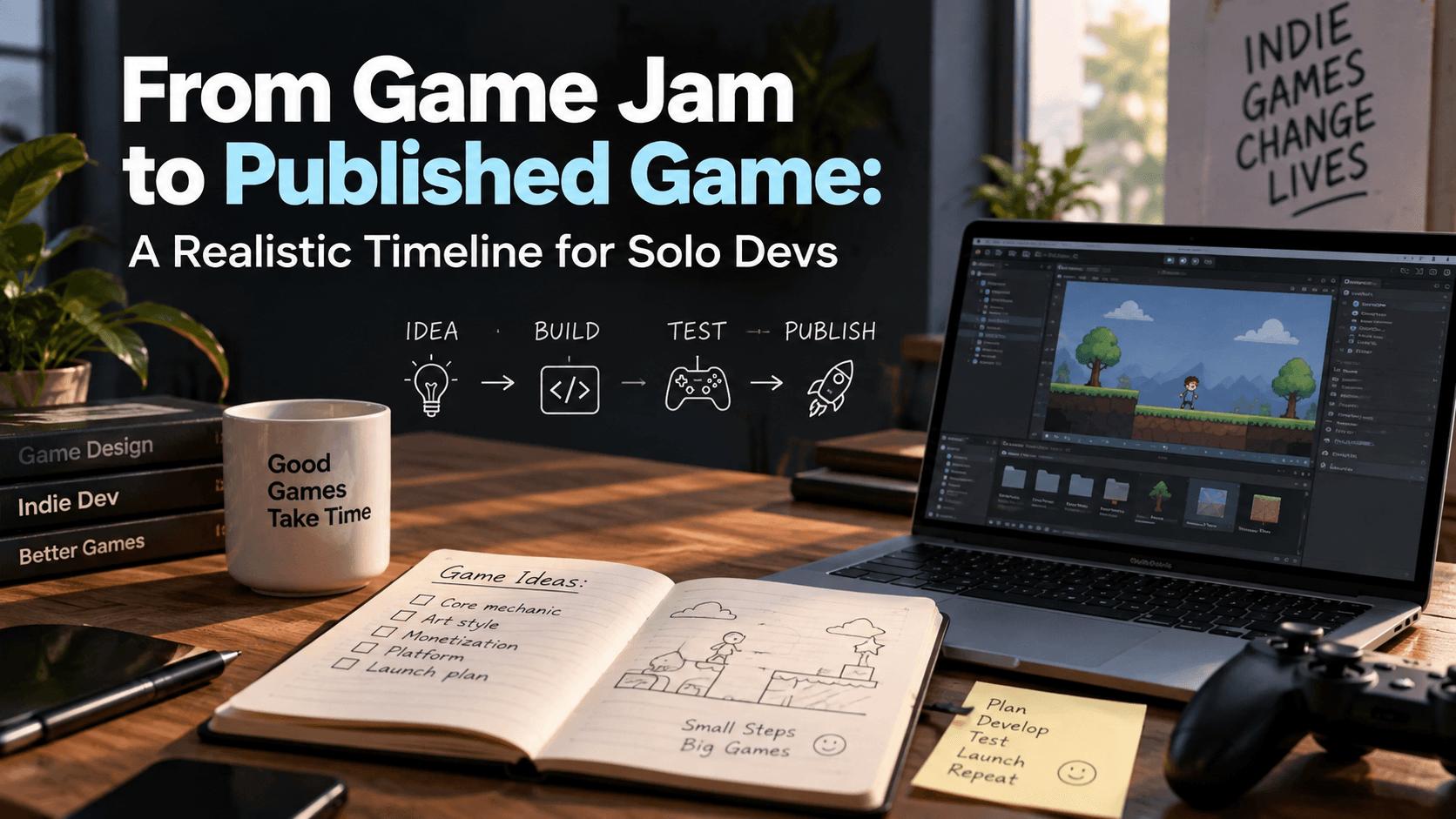
From Game Jam to Published Game: A Realistic Timeline for Solo Devs
A weekend game jam prototype and a genuinely published game are separated by more work than most solo developers expect going in. Here's a realistic breakdown of what that gap actually looks like.

Expanding Land: The .io Game Where the Map Itself Is Alive
Expanding Land takes the familiar cell-eating .io formula and adds something most games in the genre never touch: a playable area that actually expands and contracts while you're inside it. Built entirely in C for speed, it's aiming to be one of the fastest games in its genre.
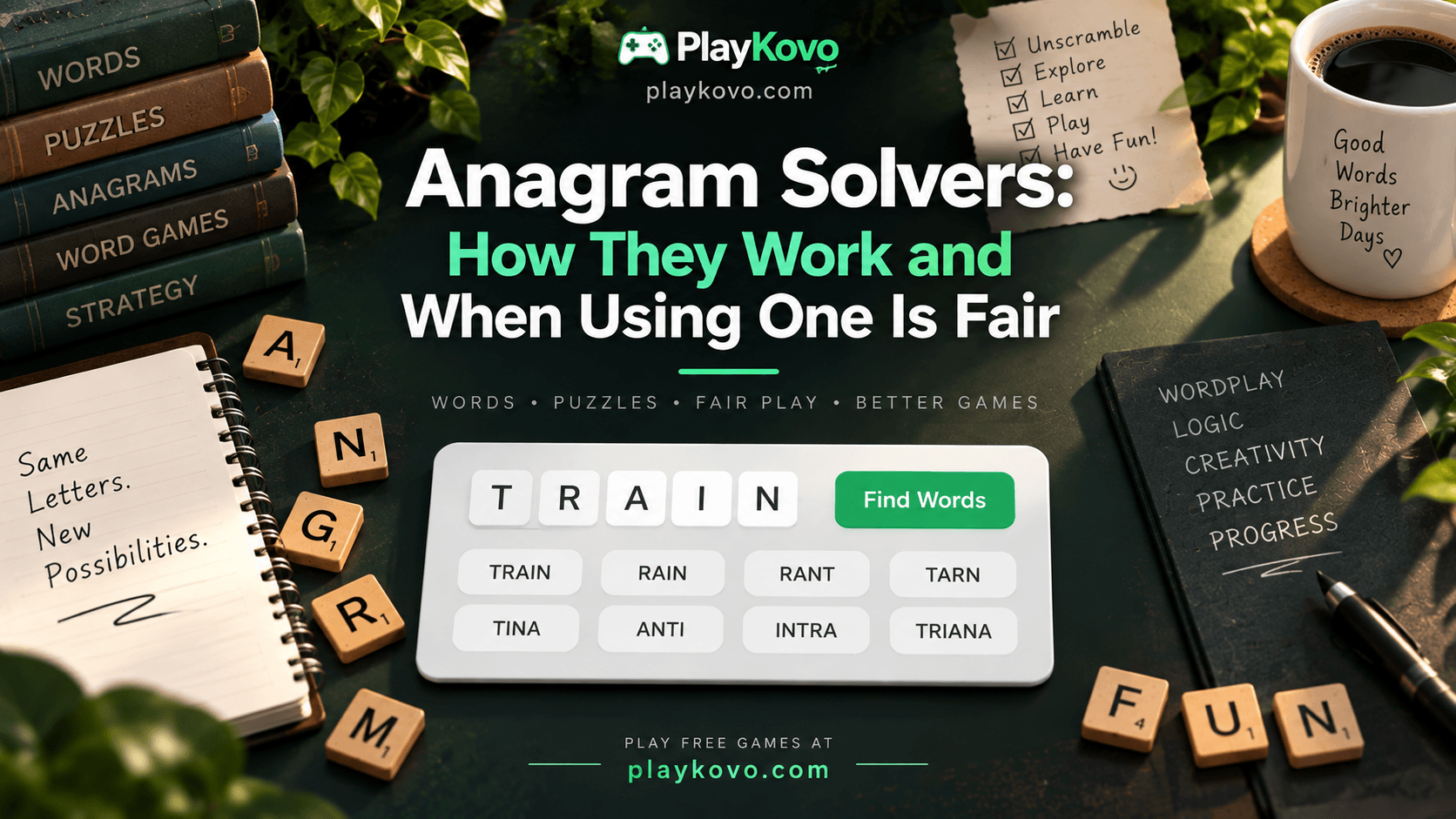
Anagram Solvers: How They Work and When Using One Is Fair
An anagram solver can instantly unscramble letters into real words, which raises an obvious question for word-puzzle players: is using one cheating, or just a different way to play?