Where Do Browser Game Websites Get Their Games?
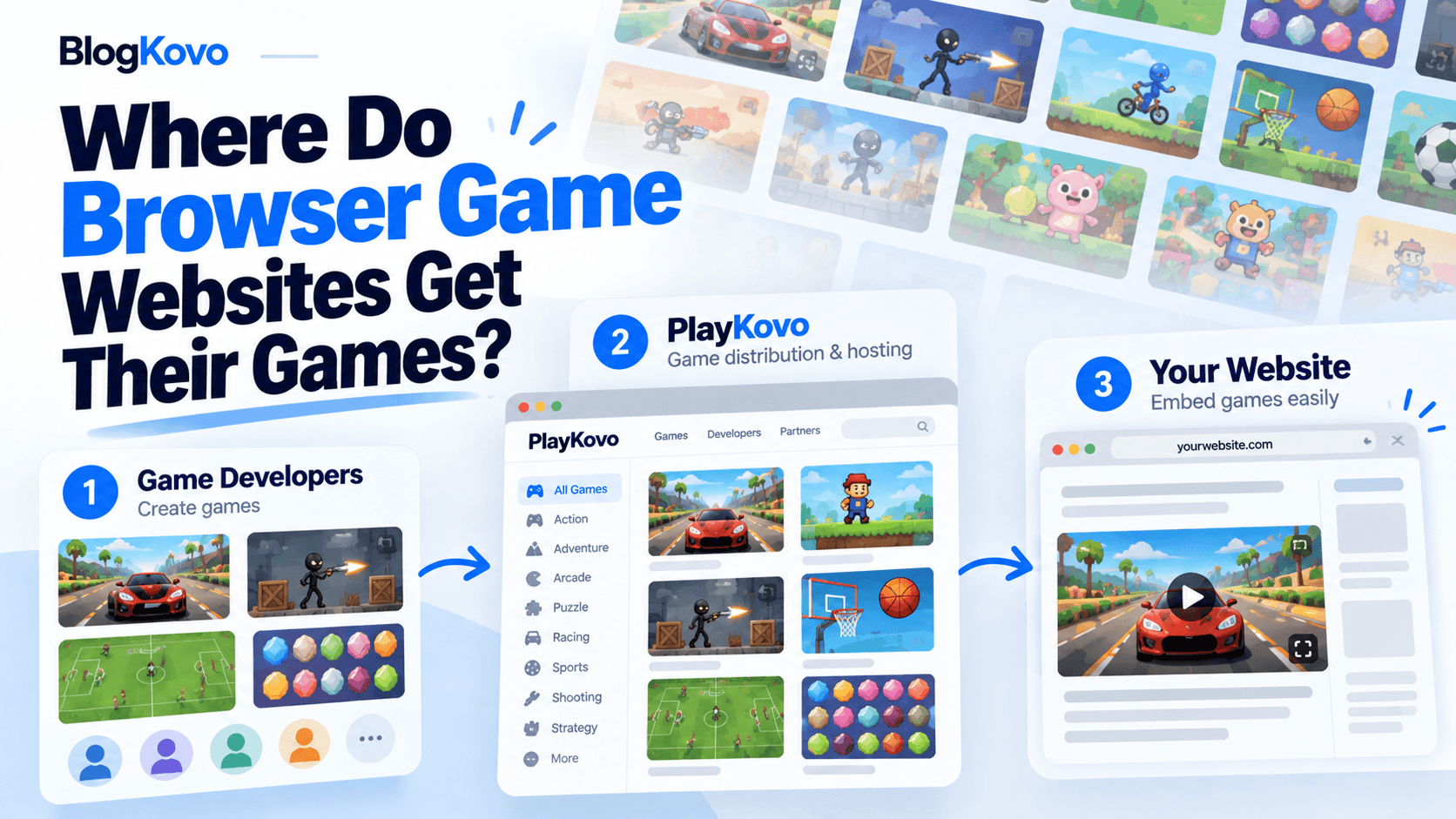
A portal with hundreds of playable games didn't build all of them internally, that would be an enormous studio, not a website. The library comes from somewhere else, usually a mix of a few sources.
Direct Developer Submissions
Many portals accept games directly from independent developers through a submission or developer panel process, the developer uploads their game, the portal reviews it, and it goes live in the library. This is how a lot of variety accumulates without the portal building anything itself.
Licensed Game Feeds and Networks
Some games come through syndication networks or licensed feeds, where a single agreement gives a portal access to a batch of games at once, rather than negotiating with each developer individually. This is a common way portals grow their libraries quickly.
In-House Games
A portal will sometimes have a handful of games built by its own team specifically for the platform, which lets it control quality and features directly for at least part of the library, even if most of the catalog comes from elsewhere.
What This Means If You're Building Something Similar
If you're trying to build a games section for your own site, the same three paths apply, though at a much smaller scale than running a full portal:
- Reach out to developers directly for permission to embed their games, which works but is slow if you want more than a few.
- Use a catalog built for this purpose. PlayKovo's catalog is essentially the licensed-feed model made available to smaller website owners, 35 games at launch, ready to embed, without negotiating individually.
- Build your own, which is realistic only if games are core to what your site does, not a supplementary feature.
For a look at what the licensed-catalog route gives you, here are two games straight from the PlayKovo catalog.
Try it live · PlayKovo catalog
A free, browser-based multiplayer dogfighter set in a Minecraft-inspired voxel world. Two teams, planes, tanks, and ships, one golden ring to fight over.
Shove your rivals off a shrinking sumo platform in this fast and funny .io brawler. Bump, dash and outsmart the crowd to be the last fighter standing, then spend your coins on hats and…
Why This Matters for Trust
Knowing how a portal sources its library also tells you something about reliability, a site pulling from developer submissions and licensed feeds it actually maintains tends to be a more stable source to embed from than a site that appears to be scraping embed codes from wherever they can be found.
FAQ
Do browser game portals build all their own games?
No, most of a large library comes from developer submissions and licensed feeds, with in-house games making up a smaller part, if any.
How do independent developers get their games onto a portal?
Through a submission process or developer panel, where the portal reviews and approves games individually.
Can a small website owner access games the same way portals do?
Yes, at a smaller scale, a catalog built for website owners, like PlayKovo's, offers the same licensed-access model without needing to negotiate with developers individually.
Why does sourcing matter if I'm just embedding one or two games?
A source that clearly maintains developer relationships or licensed feeds is more reliable and less likely to disappear than one that seems to be scraping embed codes informally.
Final Thoughts
A big game library is almost always assembled, not built from scratch, through developer submissions, licensed feeds, and sometimes a few in-house titles. PlayKovo's catalog offers website owners a version of that same access, without needing to build the relationships yourself.
Related Posts
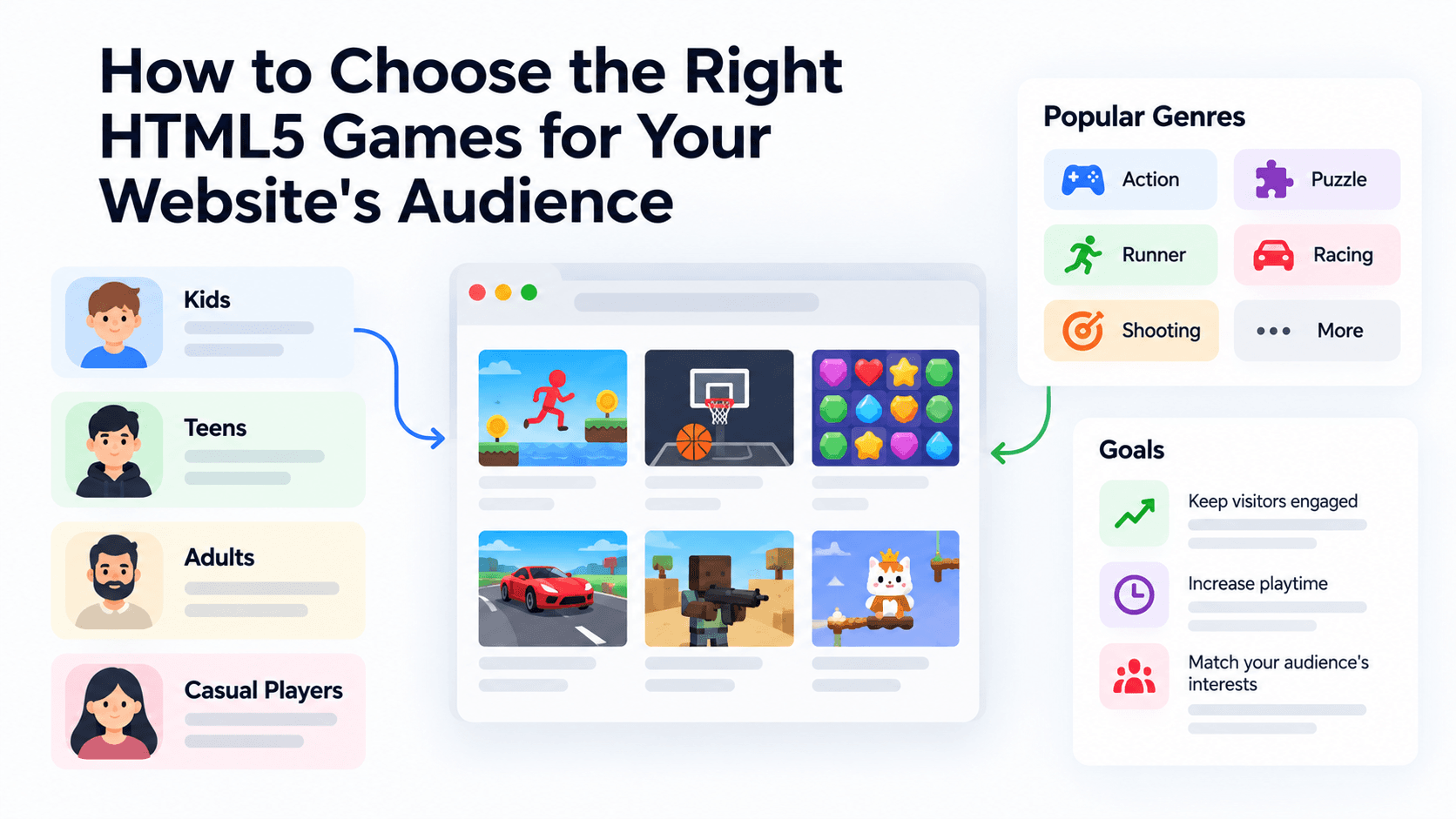
How to Choose the Right HTML5 Games for Your Website's Audience
A five-criteria scoring system for picking embeddable HTML5 games that fit a news site, blog, game portal or community, with a worked example using real PlayKovo catalog games.
A Curated 20-Game Starter Library for a New Arcade Website
Twenty embeddable HTML5 games from the PlayKovo catalog, balanced across puzzle, casual, arcade, action and sports, with controls, device support and publishing notes for each.
How to Compare Free HTML5 Game Catalog Providers Before Embedding
An independent checklist and scoring grid for comparing HTML5 game catalog providers, applied to PlayKovo, Playgama and GameMonetize using only what each publishes.