Does Embedding Free Games Actually Help Your Site's Engagement?

"Add a game and people will stay longer" is the pitch, and it's true often enough to matter, but not automatically, and not everywhere. Here's the honest version.
What a Game Embed Can Actually Move
A well-placed game embed tends to affect two metrics directly: session duration and pages or time per visit. Someone who plays a two-minute game on your site has, by definition, spent two more minutes on your site than someone who didn't, and that behavior can ripple into other engagement signals search engines and ad networks both pay attention to.
Where It Actually Works
- Waiting screens. A game embedded on a loading page, a queue page, or anywhere a visitor is stuck waiting anyway turns dead time into engaged time, since there's no competing reason to leave.
- Casual content sites. A site already built around light entertainment, where a game fits the tone, tends to see genuine engagement lift rather than feeling out of place.
- A dedicated games section. If games are part of what your site is actually for, embedding them is simply delivering on that, not a bolt-on experiment.
To measure the effect on your own numbers you need a real game on a real page. Here are two short-session games you could test with, both playable on desktop and mobile.
Try it live · PlayKovo catalog
Run, jump and push across falling hexagon floors, solo or in teams. Every tile drops after you step on it. Be the last one standing!
Steer a gummy worm across a candy picnic table, gobble sprinkles to grow long, and trick rivals into crashing into your body. Quick rounds, bots always online, on mobile and desktop.
Where It Backfires
- Shoved into unrelated content. A game embedded awkwardly into, say, a serious informational article usually reads as filler, and can actively hurt trust rather than build engagement.
- Slow-loading embeds. If the iframe itself drags down page load time, you can lose more visitors to a slow page than you gain from the ones who stay to play, a net loss even if the game itself is good.
- Wrong context, wrong audience. A game that doesn't match why someone came to your page in the first place adds friction, not stickiness.
How to Actually Measure It, Not Just Assume It
Don't take the "games boost engagement" claim on faith for your own site, test it directly:
- Compare average session duration and bounce rate on pages with an embed versus equivalent pages without one.
- Track page load time before and after adding the embed, a real speed regression can outweigh the engagement gain.
- Watch whether visitors who play the embedded game go on to view more pages, or whether the game becomes the whole visit and they leave right after.
The Honest Takeaway
Game embeds help engagement when they fit the context and load fast, and they hurt it when they're mismatched or slow. The mechanism is genuine, it's just not unconditional, which is exactly why measuring your own numbers matters more than trusting the general claim. If you're testing this out, PlayKovo's catalog is a low-effort way to try a real embed and see your own before-and-after numbers rather than guessing.
FAQ
Do game embeds actually increase session time?
Often yes, when the game fits the page's context and loads quickly, someone playing it is, by definition, staying longer.
Can embedding a game hurt my site?
Yes, if it slows page load significantly or feels mismatched with the content, the downside can outweigh any engagement gain.
What's the best type of page to add a game embed to?
Waiting or loading screens, casual content pages, or a dedicated games section tend to see the most genuine benefit.
How do I know if a game embed is actually helping my site?
Compare session duration, bounce rate, and page load time before and after adding it, rather than assuming the effect based on general claims.
Final Thoughts
A game embed isn't automatically good or bad for engagement, it depends on fit and execution. Test it on your own pages with your own numbers before deciding it's working, or deciding it isn't.
Related Posts
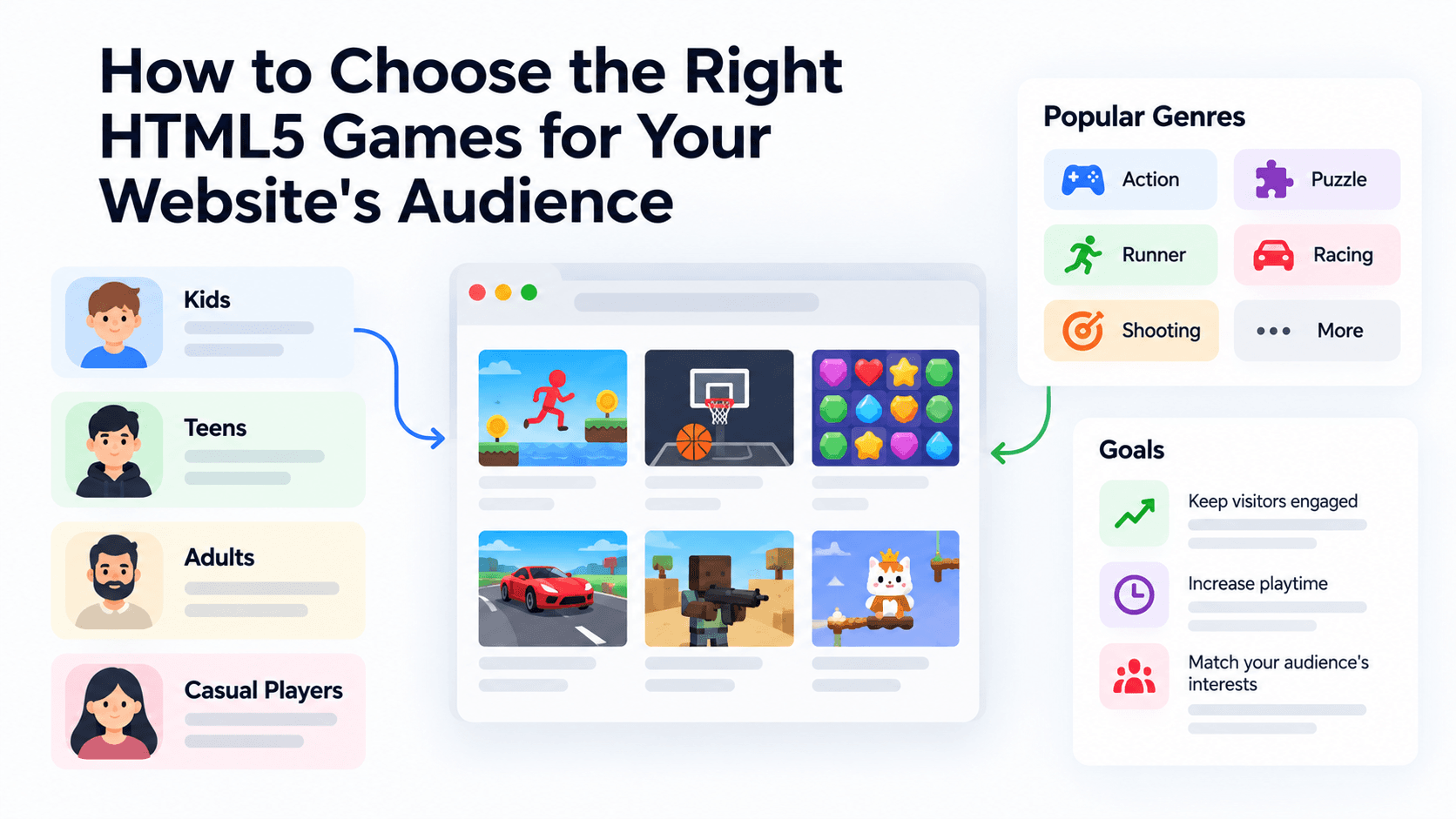
How to Choose the Right HTML5 Games for Your Website's Audience
A five-criteria scoring system for picking embeddable HTML5 games that fit a news site, blog, game portal or community, with a worked example using real PlayKovo catalog games.
A Curated 20-Game Starter Library for a New Arcade Website
Twenty embeddable HTML5 games from the PlayKovo catalog, balanced across puzzle, casual, arcade, action and sports, with controls, device support and publishing notes for each.
How to Compare Free HTML5 Game Catalog Providers Before Embedding
An independent checklist and scoring grid for comparing HTML5 game catalog providers, applied to PlayKovo, Playgama and GameMonetize using only what each publishes.